End-to-End Product Discovery
at a SaaS Startup

TL;DR
As Arbitrack's first designer, I ran end-to-end discovery: heuristic evaluation, competitive analysis, and user research. Results contributed to product roadmap balancing user and business needs, and a legally scoped AI feature built on Anthropic's MCP.
Prior to my joining, the product had been built without any UX input. I brought something most designers couldn't. I already knew how the product felt to use because I sell on Amazon.
The discovery produced qualitative data findings, 40+ heuristic findings, competitive analysis across 10 tools, a prioritized roadmap, and a Decision Confidence AI feature built on Anthropic's Model Context Protocol scoped around legal constraints.
Overview
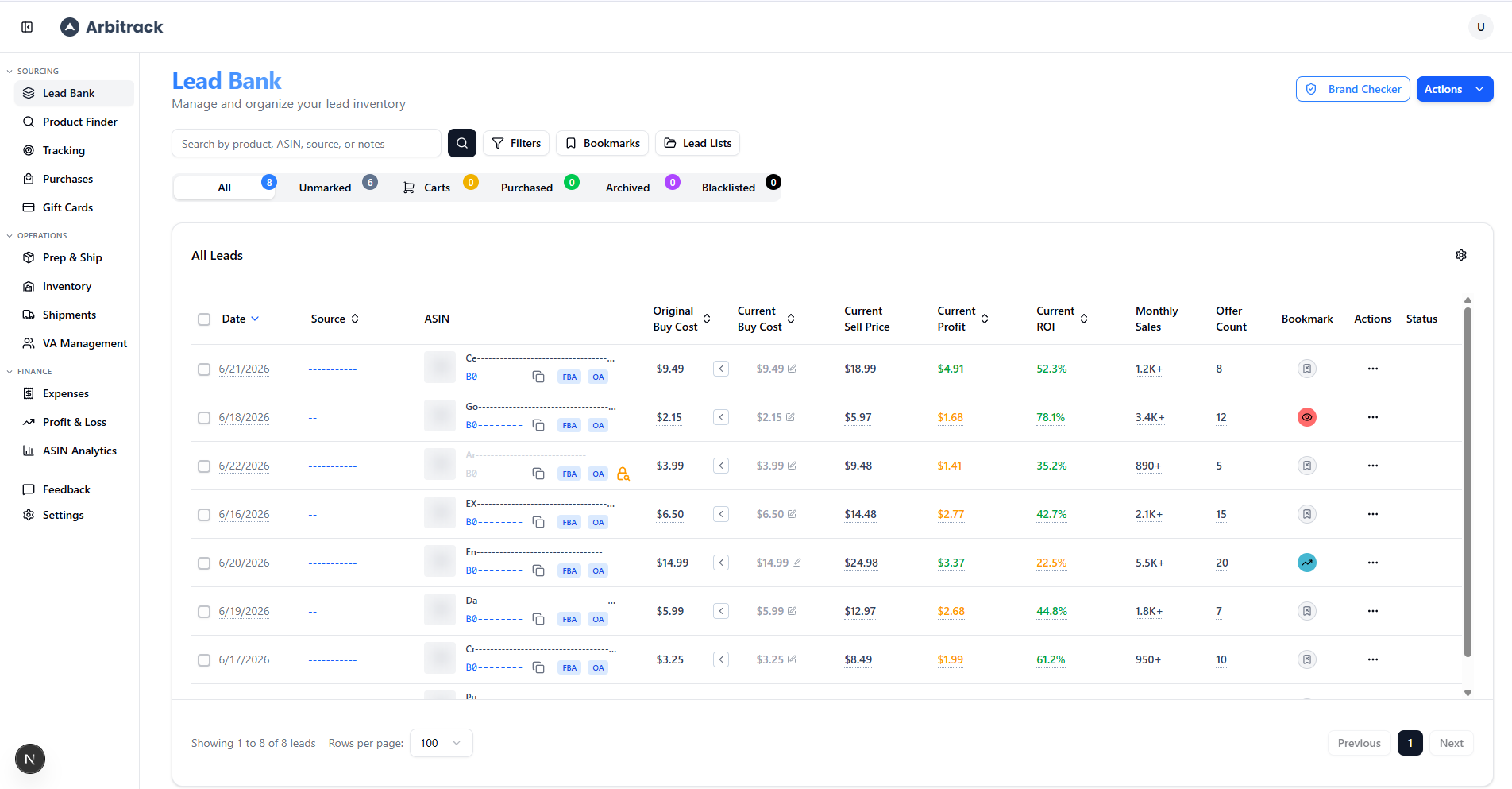
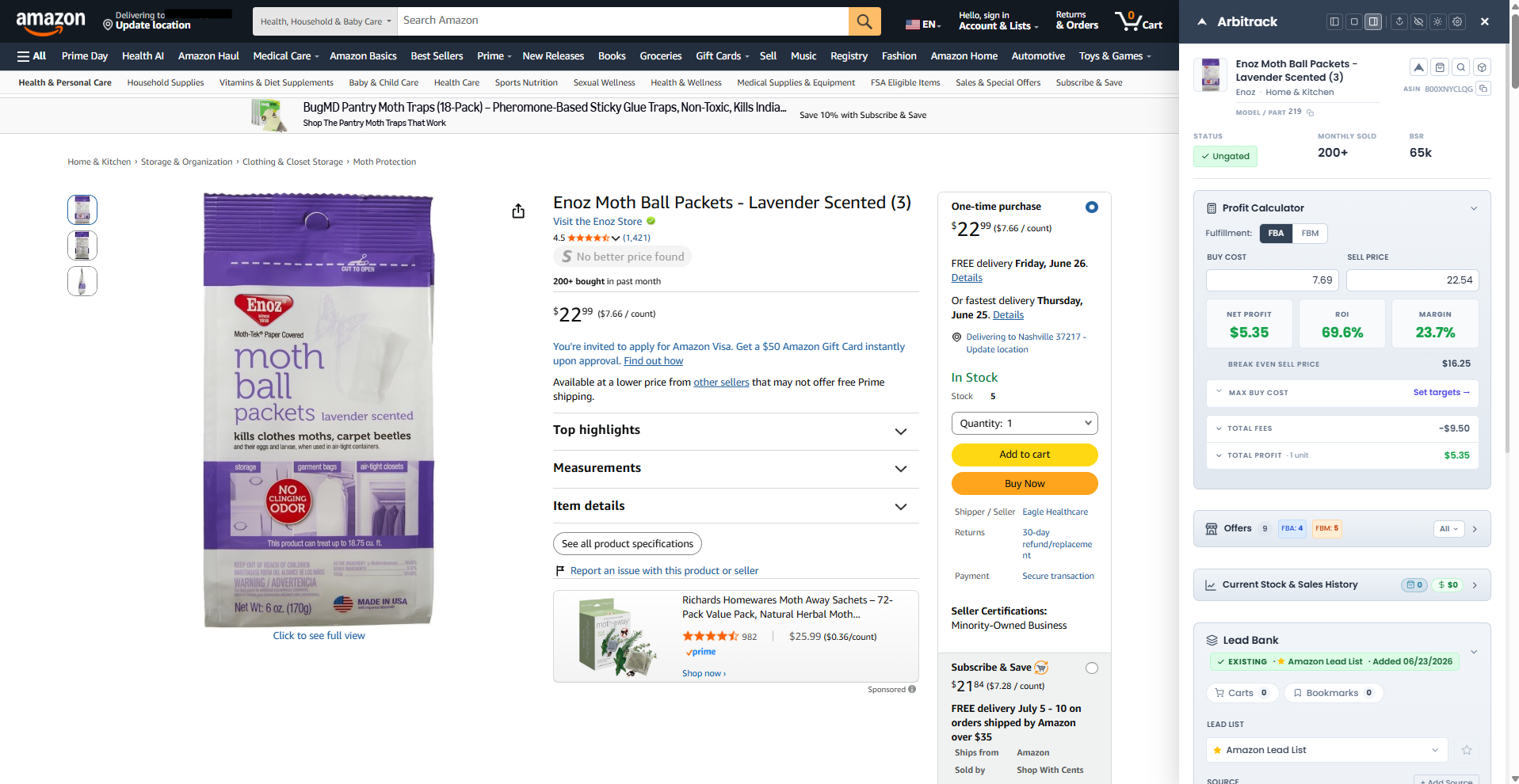
Amazon FBA sellers spend most of their time on two things: finding products to buy and deciding whether to buy them. Arbitrack covers both (the Chrome extension surfaces data on Amazon listing pages, the Lead Bank is where sellers manage what they find).
When I joined in 2026, neither surface had ever been evaluated. No designer had touched the product. I was brought in to change that before anything new was scoped.
"What do we build next, and why?"
The Goal
Before auditing anything, I needed a frame for what actually mattered:
"How can we increase subscription activation and retention?"
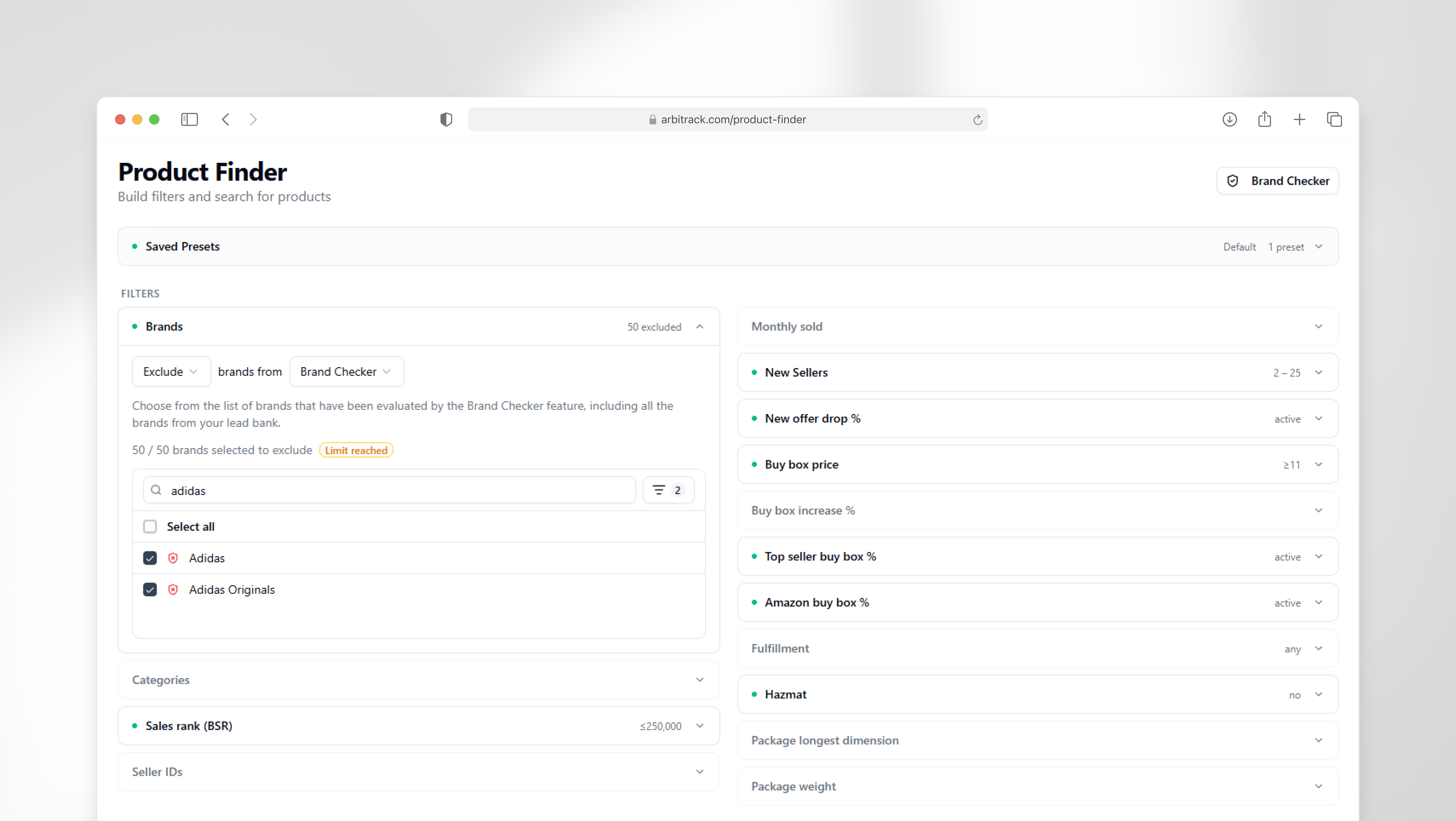
Applying the Pareto Principle, I identified the Chrome extension and Lead Bank as the 20% of the product driving 80% of user value. These are the surfaces that brought most users to Arbitrack in the first place. Friction in these parts had a direct effect on retention. This framing defined the entire project.
Understanding the Workflow
Before auditing, I mapped the full sourcing workflow to understand where sellers spent time, switched tools, and made decisions.
The workflow has five stages:
The Lead Bank is the bulk of the workflow. A seller looks at profitability, supply and demand, then decides: Monitor, Purchase, or Pass.
User Research
Before evaluating the product, I needed to verify that I understood the real pain points, not just assume them. I wrote a 40-question discussion guide structured around the sourcing workflow: how sellers find leads, evaluate them, and make buy decisions. The goal was to confirm pain points before auditing against them.
"The experienced seller wants efficiency, the beginner seller wants certainty. Those are two completely different products living inside the same platform."
— Co-founder
"I've been doing this two years and I still second-guess every purchase over $50. There's just so many factors to consider."
— Experienced seller, 3 years experience
"There was no tutorial or anything. I felt like I was just expected to figure things out on my own."
— Churned user
UX Audit & Heuristic Evaluation
I walked through every stage of the workflow and evaluated each against Nielsen's 10 heuristics. 40+ findings, each documented with severity and evidence.
Six findings visible in the Lead Bank:
Competitive Analysis
I mapped Arbitrack against 10 tools to understand what solutions already existed and how we can learn from them.
Tools I analyzed: Spreadsheets, Notion, BuyBotPro, SellerAmp SAS, Helium 10, Keepa, Sellerboard, Jungle Scout, Tactical Arbitrage, InventoryLab
Core findings:
- The workflow is fragmented by design. No single tool covers the full OA lifecycle. Tools typically specialize in one stage of the workflow.
- A confidence signal exists to help sellers make decisions, but provides no explanation. BuyBotPro has a Deal Score. It's the only tool in the space that has made an attempt at this. But it's a number without explanation, and sellers report ignoring scores they can't verify. It feels like a trust fall with your business on the line.
The gap: No tool gives sellers an explainable answer to the question they ask before every purchase: should I buy this? BuyBotPro has a score but no explanation. Keepa has powerful data but no decision support. Every tool specializes in one part of the workflow.
Prioritization
Research identified the pain points sellers actually felt. → The audit surfaced the specific friction in the Find and Evaluate surfaces. → Competitive analysis revealed that no tool was helping sellers make a confident buy decision.
This led to our problem statement:
Problem statement: How might we reduce friction and support confident buy decisions in the two surfaces driving activation and retention?
I mapped everything into an impact/effort matrix.
AI Feature Recommendation
"Sellers are dealing with massive amounts of data, conflicting information, and confusion around what actually matters."
— Research participant
User feedback and the audit pointed to the same gap: the buy decision is the most important moment in the FBA workflow and the least supported. Sellers analyze signals manually and make a judgement call (often with no structure, according to user feedback from beginner sellers).
The solution was a Decision Confidence feature built on Anthropic's Model Context Protocol, an AI layer that provides a reasoned assessment on which leads to act on, based on the user's sales history, past purchase outcomes, and live lead data.
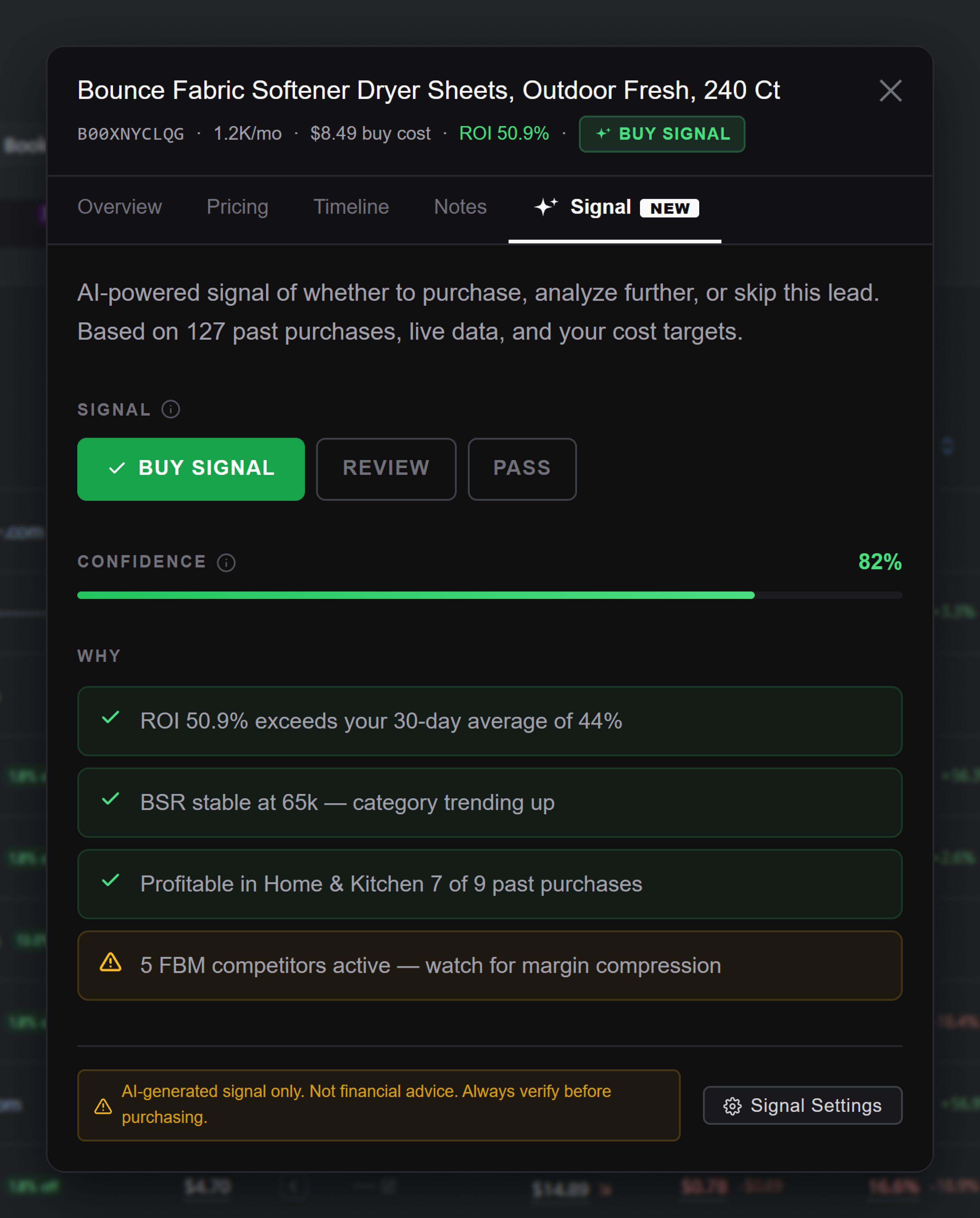
CONCEPT: Decision Confidence as a new tab in the Lead Info dialog
Informed by FTC consumer protection guidelines , the Investment Advisers Act (1940) , and the EU AI Act (2024) .
To address this:
- Copy was deliberately framed as probabilities and signals, not advice.
- "Buy Signal" not "Purchase"
- "AI-powered signal"
- Confidence percentages, rather than advice.
- A disclaimer reinforcing that the feature informs, not decides.
- User agreement at onboarding acknowledging AI signals are informational, not advisory.
This framing preserves the feature's core value while reducing exposure to consumer protection and financial advice regulations.
What's next
This project is ongoing. Shipped designs, activation/retention metrics, and the AI feature are all still underway as of June 2026.
Allen Chung has done great work for Arbitrack. He took ownership of our UI/UX from day one and consistently raised the bar – not just executing what I asked for, but spotting opportunities and proposing improvements I had not even thought of. That kind of initiative is exactly what you want in a designer.
Allen is professional, easy to work with, and genuinely invested in getting the details right. The work he's done has made Arbitrack noticeably better, and I highly recommend him.